2015 Ford Edge Horn fuse location
Power Distribution Box
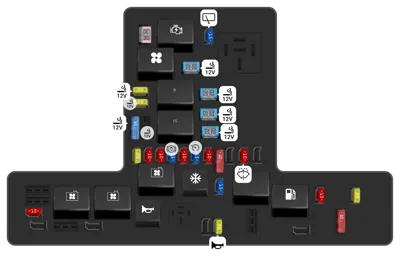
Fuses and relays related to the horn:
| Type | No. | Description | |
|---|---|---|---|
Relay | 40 | Horn relay. | |
Fuse MICRO2 20A | 50 | Horn. | |
| ... hay otros 55 fusibles no mostrados ... | |||
Why does the horn fuse blow in the Edge?
The most common reasons for the horn fuse blowing are:
- Short circuit: a short circuit in the horn wiring or within the horn itself can cause an excessive current flow, which causes the fuse to blow to protect the circuit. This can be due to damaged, frayed, or exposed wires coming into contact with the vehicle’s body. The wiring through the steering wheel is especially susceptible to wear due to its movement.
- Defective horn: if the horn has an internal problem, such as a shorted coil, it may draw more current than usual, which can overload the fuse.
- Faulty horn switch: the horn switch may get stuck or fail, which can cause a continuous flow of current and overload the fuse.
If the horn fuse is blown, it’s important to identify and fix the cause of the overload before replacing it, to prevent the new fuse from blowing as well.
Other causes of horn failure in the Edge
In addition to a blown fuse, these are the other most common causes that can prevent the horn from working:
- Horn relay issues: the horn relay controls the power supply to the horn. If the relay fails, the horn will not receive the necessary power to operate.
- Wiring problems: broken, worn, or poorly connected wires in the horn circuit can interrupt the flow of electricity. This includes loose or corroded connections anywhere in the system, from the switch to the horn, often passing through the steering wheel.
- Defective horn: the horn itself may be defective or damaged. This can be due to age, wear, or physical damage.
- Faulty ground connection: a bad ground connection can prevent the horn from functioning correctly. The horn and the relay need a good ground connection to complete the electrical circuit.
Common issues with the Horn fuse
Parking Brake Chime won’t stop
Ford Edge 2015
Parking brake warning light appears on heads up display & the beeping doesn’t stop. The parking brake is NOT deployed. Which fuse # can I take out to get beeping to stop?

Doesn't star iv check alternator starter fuses
Ford Edge 2013 Sel 2wd 6cyl
My Ford edge 2013 won't crank over iv changed starter iv tested solenoid the hard wiring from starter to fuse box changed fuses and relays. I insert key and try to start car all my dash lights dim out…
F40 fuse is blowing when being driven or parked
Ford Edge 2013 V 6 edge limited edition
F40 fuse blowing fuse with know one in or not in use
Parked
Parked
F40 fuse is blowing when being driven or parked
Ford Edge 2013 V 6 edge limited edition
F40 fuse blowing fuse with know one in or not in use
Parked
Parked
Still have doubts about your issue?
Ask the community!
Ask the community!


Find what you needed?
Thank you!

